
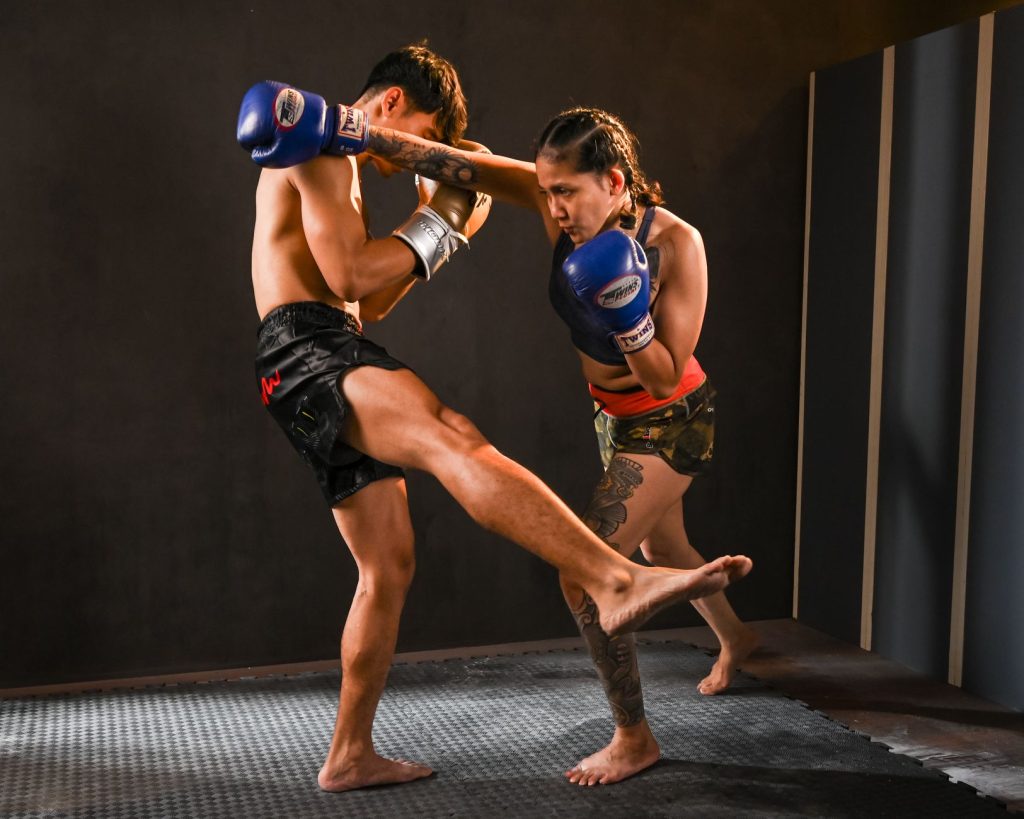
Muay Thai boxing is often called the art of eight limbs because it uses fists, elbows, knees, and shins. It is the national sport of Thailand, and it is also the country's most exported martial art. Visitors who arrive expecting a workout find something larger. They find a sport with deep rules, a culture with deep roots, and a training system that has shaped fighters for generations. Tradition and discipline are woven into every aspect of Muay Thai, from daily routines to the values passed down between trainers and students. Understanding that system before you arrive makes the training itself richer.
A Brief History That Explains the Rules
Modern Muay Thai boxing grew out of older Thai fighting arts, particularly Muay Boran, which dates back centuries. The rules that govern the sport today were standardized in the 20th century, and international competition has been governed by the IFMA since 1995. Fights are typically five rounds of three minutes each, with two minute breaks in between. Scoring favors clean strikes that affect balance and control. A kick that lands on the arms is worth less than one that lands on the ribs. That rule surprises many newcomers, but it shapes everything about how fighters train.
In Muay Thai boxing training in Thailand, the emphasis on clean, balanced strikes is visible in every drill. Trainers correct footwork before power. They correct balance before speed. They correct breathing before anything else. That order exists because the sport rewards control, and every coach knows it. This methodical approach reflects the discipline that has long been a foundation of Muay Thai.
The Structure of a Typical Training Session
A session at a serious camp in Thailand follows a predictable shape, and that predictability is part of the learning.
- Warm up: ten to fifteen minutes of skipping rope and light jogging.
- Shadow boxing: two to three rounds, focused on rhythm.
- Pad work: four to six rounds with a trainer, correcting technique in real time.
- Bag work: additional rounds on the heavy bag to build endurance.
- Clinch: ten to twenty minutes of close range grappling.
- Conditioning: push ups, sit ups, or shin kicks on the bag.
- Cool down: light stretching and a final wai kru.
That structure repeats twice a day at many camps. It looks simple. It is not. Every block builds on the one before it, and every correction compounds over weeks.
Why Scoring Rules Matter to Students
Understanding Muay Thai's scoring rules improves how you train, even if you never plan to fight. The sport rewards balance, control, and clean technique. A student who knows this stops chasing power and starts chasing position. Trainers notice. Pad work improves. Sparring gets safer. The sport's logic rewards patience, and that patience is exactly what Thailand's best camps try to teach.
There is also a cultural side to the sport that many visitors miss. The wai kru, the traditional dance performed before fights, honors the fighter's teachers. The ram muay that follows is a demonstration of the fighter's style. Together they take four to six minutes, and they set the tone for everything that follows. Watching a fighter perform the wai kru is watching respect turned into movement. It is one of the strongest examples of the tradition that continues to define Muay Thai today.
The Difference Between the Sport and the Workout
Many gyms outside Thailand have adopted Muay Thai as a fitness class. That is a good thing for the sport, but it is a different product. A Muay Thai boxing training session in Thailand is closer to a martial arts class than an aerobics one. Pad work is taught slowly, with corrections. Sparring is controlled. Conditioning is rigorous. The goal is skill, not sweat, and the sweat comes anyway.
That difference is why visitors who train in Thailand often find it hard to return to a fitness studio at home. The depth is addictive. Once you understand why a trainer is asking you to move your hip half an inch, you stop seeing the movement as a workout and start seeing it as a craft. For travelers comparing different options, Muay Thai camp with present campaign may seem attractive, but the quality of coaching, tradition, and discipline should remain the most important factors when making a choice.
How to Get the Most Out of Your Time
- Watch a session before you commit to a week.
- Train once a day at first, and add a second session only when you are recovering well.
- Ask questions during breaks. Trainers in Thailand rarely volunteer explanations, but they rarely refuse one either.
- Keep a notebook. Corrections repeat for a reason.
- Respect the wai kru. It is not decoration, and it matters to everyone in the room.
Muay Thai is a sport with rules, history, and traditions that reward attention. Visitors who arrive with curiosity rather than impatience leave with technique, fitness, and a sharper understanding of what a martial art actually is. Through a blend of tradition and discipline, Muay Thai boxing offers lessons that reach far beyond physical ability. That combination is why the sport has survived for centuries and why it still draws students to Thailand from every corner of the world. For many visitors, tradition provides the cultural connection, while discipline creates the mindset that makes the experience truly meaningful.
————————————————————————————————————
When you send the report to me , i confirm i will send money in 24 hours to your Paypal.com.
If you are quiet for 10 hours , i will cancel it because you may be not ready a long time.
If admin refuse my article ( not related site), please let me know and cancel immediately and I will appreciate because we are not lose time to wait.
kit