
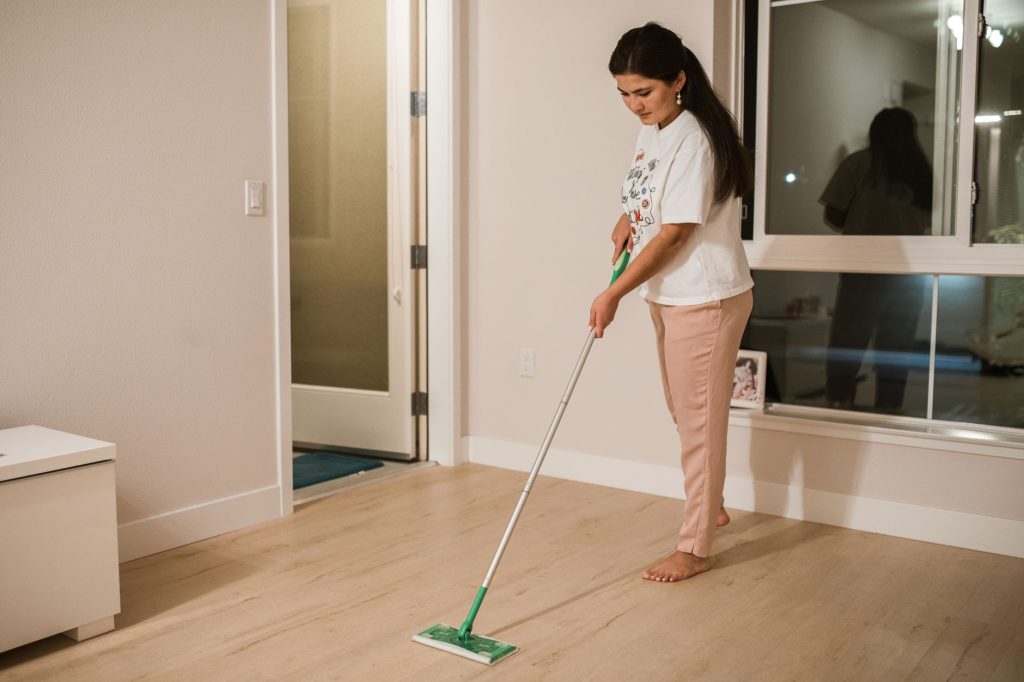
A full house cleaning involves far more than running a vacuum through the main rooms and wiping visible surfaces. Professional cleaners usually work through the home in a deliberate order so dust, crumbs, moisture, and loose debris do not end up back on areas that were already cleaned. The exact routine changes with the size and condition of the home, but most visits follow the same basic principle: work from less soiled areas toward the messier ones and leave floors until later in the process.
Living Areas Start With What Collects Dust
Living rooms, family rooms, and hallways often look fairly clean at first glance, yet dust settles quickly on shelves, window ledges, picture frames, lamps, electronics, and furniture edges. These surfaces usually come before vacuuming so anything knocked loose ends up on a floor that has not yet been cleaned.
Upholstered furniture may need crumbs or pet hair removed, especially along seams and under cushions. Tables and other hard surfaces are wiped down, and visible marks around light switches, door handles, and frequently touched areas get attention as well.
Once the higher surfaces are finished, vacuuming picks up the dust and debris that fell during the earlier work.
Kitchens Usually Take More Time Than Expected
Kitchen cleaning often slows the pace because different surfaces collect different types of residue. Countertops hold crumbs and spills, cabinet fronts pick up fingerprints, and cooking areas develop grease that simple dusting will not remove.
Cleaners generally work around appliances, sinks, backsplashes, counters, and cabinet exteriors before moving down to the floor. Dried food near handles or around the stove often requires more scrubbing than the rest of the room.
The sink usually comes near the end of that process. Cleaning it too early often means dirty water, cloths, or tools end up passing through it again.
Fun fact: Kitchen grease does not always stay close to the stove. Tiny airborne droplets settle on nearby cabinet fronts, walls, and decorative objects, which explains why surfaces that never touch food sometimes develop a slightly sticky film.
Bathrooms Need Detail Work, Not Speed
Bathrooms combine soap residue, water spots, hair, dust, and moisture in a relatively small space. That makes them one of the more detailed parts of a cleaning visit.
Showers and tubs often need time for cleaning products to loosen buildup before scrubbing begins. During that wait, the cleaner may move to sinks, mirrors, fixtures, counters, and other surfaces.
Toilets require separate attention, while corners around the base and behind them often collect dust and hair that are easy to miss during a rushed cleanup. Floors come last, once the higher surfaces have been wiped and rinsed.
Bedrooms Are More About Resetting the Space
Bedrooms usually involve less grease and moisture than kitchens or bathrooms, but they still collect dust quickly. Nightstands, dressers, window ledges, lamps, and headboards need regular attention.
Vacuuming under accessible furniture makes a noticeable difference, especially in homes with pets. Bedside areas also tend to collect small debris that disappears against carpet until the room receives a proper cleaning.
If the service includes bed-making or light straightening, those tasks usually happen before the final floor work so the room is left in order.
Floors Come After the Rest of the Room
Cleaning floors too early creates extra work. Dust from shelves, crumbs from counters, and hair from bathroom surfaces all end up below.
Hard floors are usually vacuumed or swept before mopping. This keeps loose debris from turning into streaks once moisture is added. Carpeted areas get vacuumed after furniture and surface cleaning is finished.
Edges deserve attention too. Dust often gathers along baseboards, behind doors, and in corners where normal foot traffic never reaches.
Cleaning Is Physical Work
Professional cleaning places steady demands on the body. Reaching above shoulder height, kneeling beside tubs, carrying equipment, climbing stairs, pushing vacuums, scrubbing stuck-on residue, and repeating the same hand movements throughout the day all add up.
Injuries sometimes happen during routine tasks rather than dramatic accidents. A cleaner might strain a back while lifting equipment, slip on a wet floor, injure a shoulder while reaching, or develop wrist and hand pain after repeated scrubbing. If the injury happens during assigned work, details about the task, time, location, medical treatment, and missed work often become part of the workplace injury record and any workers’ compensation claim that follows. If that claim is disputed or denied, appeal hearing representation may become part of the next stage of the process.
Deep Cleaning Goes Beyond the Regular Routine
A deep clean usually adds areas that receive less attention during ordinary upkeep. Baseboards, door frames, detailed cabinet surfaces, buildup around fixtures, and neglected corners take more time because dirt has had longer to settle.
This is also where the difference between frequent cleaning and occasional cleaning becomes obvious. A surface wiped every week usually needs little effort. The same surface left untouched for months often requires repeated passes.
A thorough cleaning visit ends with the home looking refreshed, but much of the work happens in places people rarely notice individually. Clean edges, dust-free surfaces, clear floors, and bathrooms without buildup blend together. That is usually the point: no single area calls attention to itself because the entire space feels properly cared for.